

Vape Guest Post Backlinks: How Vape Shops and E-Liquid Brands Get Real Links
Quick answer: Vape brands earn backlinks from real vaping blogs, device review sites, harm-reduction and quit-smoking resources, and adult lifestyle sites that accept the topic. Because vaping is heavily restricted in advertising, most mainstream publishers will not link, so careful vetting matters. Write factual, adult-focused content, avoid health claims and anything appealing to under-18s, and follow the advertising rules where you sell.
Key takeaways
- Vaping is one of the most restricted product categories for advertising, which makes organic search and links especially valuable.
- In the UK, rules on promoting nicotine-containing e-cigarettes are strict. Get legal advice for your market and keep content factual.
- Device reviews, coil and maintenance guides and e-liquid explainers earn links far more easily than sales pitches.
- The vape niche is crowded with expensive link sellers. Real traffic and topical focus are the deciding checks.
Why do vape brands depend on SEO and backlinks?
Most paid channels are closed or heavily limited for vape businesses. Google Ads, Meta and many display networks restrict or ban nicotine and e-cigarette advertising. Influencer marketing comes with its own legal risks. That leaves organic search as one of the few scalable ways for vape shops and e-liquid brands to reach adult customers.
Organic rankings for terms like “e-liquid”, “disposable vape alternatives” or “pod kits” are competitive and dominated by large retailers. Relevant backlinks from trusted sites are one of the main factors separating the shops on page one from the rest.
What advertising rules affect vape content?
This is a general overview, not legal advice. Rules differ by country and change regularly.
- UK: the Tobacco and Related Products Regulations restrict the advertising of nicotine-containing e-cigarettes in many media, including much online advertising. The CAP Code also sets rules for marketing communications, including not appealing to under-18s and not making unsupported health claims.
- EU: the Tobacco Products Directive applies similar cross-border advertising restrictions, with national variations.
- US: FDA rules govern how tobacco products, including e-cigarettes, can be marketed, along with state-level rules.
Editorial content that informs adults, such as a device comparison or an explanation of nicotine strengths, is treated differently from paid advertising, but grey areas exist. Keep content factual, aimed at adults, free of health claims and free of anything that could appeal to young people. When in doubt, take advice.
Which sites accept vape guest posts?
| Site type | Fit | Notes |
|---|---|---|
| Vaping news and community blogs | Excellent | Most relevant, often enthusiast-run |
| Device and e-liquid review sites | Excellent | High buyer intent, value honest reviews |
| Harm reduction and quit-smoking resources | Good, selective | Strict about claims and tone |
| Men’s and adult lifestyle sites | Sometimes | Check vape policy first |
| Tech and gadget blogs | Sometimes | Good for device tech angles |
| Business and retail blogs | Sometimes | For B2B wholesale and industry topics |
What should vape brands pitch?
Vaping readers are often enthusiasts who know their hardware. Content that respects that knowledge gets published:
- Device explainers: pod kits versus box mods, mouth-to-lung versus direct-to-lung, how airflow changes the experience.
- Maintenance guides: how to prime and replace coils, cleaning a tank, extending coil life, battery safety.
- E-liquid education: PG/VG ratios explained, freebase versus nicotine salts, how steeping works.
- Regulation explainers: what changing disposable vape rules mean for adult vapers, how product notification works, what to check on packaging.
- Battery safety: safe charging, storage and transport of lithium-ion cells, a topic editors value because it protects readers.
- Industry and recycling: how vape recycling schemes work and what shops are doing about waste.
Battery safety and recycling content is particularly useful because it is responsible, widely relevant and easy for editors to justify publishing.
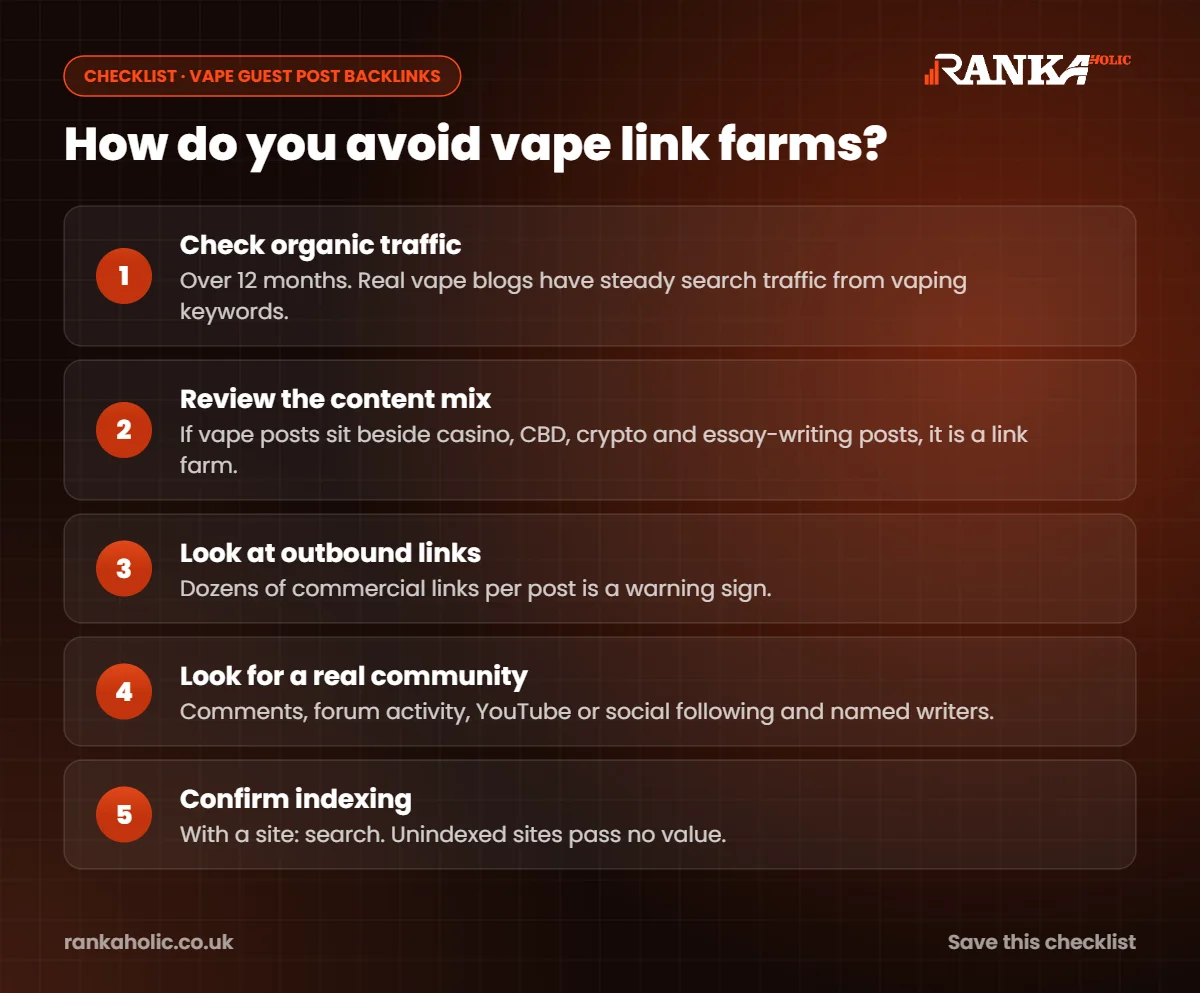
How do you avoid vape link farms?
Because legitimate options are limited, the vape niche attracts link sellers charging high prices for posts on sites with no audience. Before paying for or pitching any vape site:
- Check organic traffic over 12 months. Real vape blogs have steady search traffic from vaping keywords.
- Review the content mix. If vape posts sit beside casino, CBD, crypto and essay-writing posts, it is a link farm.
- Look at outbound links. Dozens of commercial links per post is a warning sign.
- Look for a real community. Comments, forum activity, YouTube or social following and named writers.
- Confirm indexing with a
site:search. Unindexed sites pass no value.
Which pages should vape backlinks point to?
Many publishers prefer not to link straight to product pages selling nicotine. Build helpful guides on your site and use them as link targets:
- A beginner’s guide to choosing a first device.
- A coil compatibility and replacement guide.
- An e-liquid strength and ratio explainer.
- A battery safety page.
- A recycling and returns page explaining how customers can dispose of devices responsibly.
These pages earn links more easily, and internal links from them pass authority to your category and product pages.
How should vape anchor text look?
Keep it brand-led and natural. Use your shop or brand name most of the time, descriptive anchors such as “this guide to coil priming” where relevant, and very few commercial anchors like “cheap e-liquid UK”. An unnatural anchor profile in a high-risk niche is easy for Google to spot.
How do vape shops build local backlinks?
Physical vape shops have extra link opportunities online-only retailers miss. Local business directories, chamber of commerce memberships, local news coverage of shop openings or recycling initiatives, and partnerships with nearby businesses all create relevant local links. These help you appear in map results for “vape shop near me”, which is often where in-store sales start.
Make sure your name, address and phone number are identical everywhere you are listed, and keep your Google Business Profile complete and up to date.
How many vape backlinks do you need?
It depends on your market. A local shop in a small town might compete with a handful of quality local and niche links. A national e-liquid brand competing with large retailers needs a sustained campaign. Compare your referring domains with the top three ranking competitors for your core category terms and close the gap steadily, typically five to ten real niche links a month.
Common vape link building mistakes
- Paying premium prices for fake blogs. High price does not mean high quality in this niche.
- Making health claims. Claims about health benefits create legal risk and get content rejected.
- Youth-appealing content. Cartoon imagery, sweets-themed language or anything that could appeal to under-18s is a compliance problem.
- Only linking to product pages. Publishers resist, and it looks commercial. Use guides as link targets.
How Rankaholic builds vape backlinks
We build links for vape shops and e-liquid brands through manual outreach to real vaping blogs, review sites and adult lifestyle publications that accept the niche. Every site is vetted for real traffic and clean outbound links, every article is factual and adult-focused, and links point to pages that are appropriate to promote. If you also sell CBD, our guide to CBD and cannabis guest posts covers the rules in that market. See our full manual link building services for how we work.
Frequently Asked Questions
Can vape websites get backlinks?
Yes. Real vaping blogs, device review sites, harm reduction resources and some adult lifestyle and tech sites accept vape content. Mainstream publishers often do not, so careful vetting is essential.
Is guest posting legal for vape brands in the UK?
Editorial content is treated differently from paid advertising, but UK rules restrict the advertising of nicotine-containing e-cigarettes. Keep content factual, adult-focused and free of health claims, and take legal advice for your situation.
What content works best for vape guest posts?
Device explainers, coil and maintenance guides, e-liquid education, battery safety and recycling guides tend to be accepted and earn links.
Why are vape backlinks so expensive?
Few legitimate sites accept vape content, so prices rise. Many sellers exploit this with expensive posts on sites with no real traffic, so check traffic before paying.
Where should vape backlinks point?
Helpful guides such as device buying guides, coil guides and battery safety pages, which publishers are comfortable linking to and which pass authority to your product pages.

